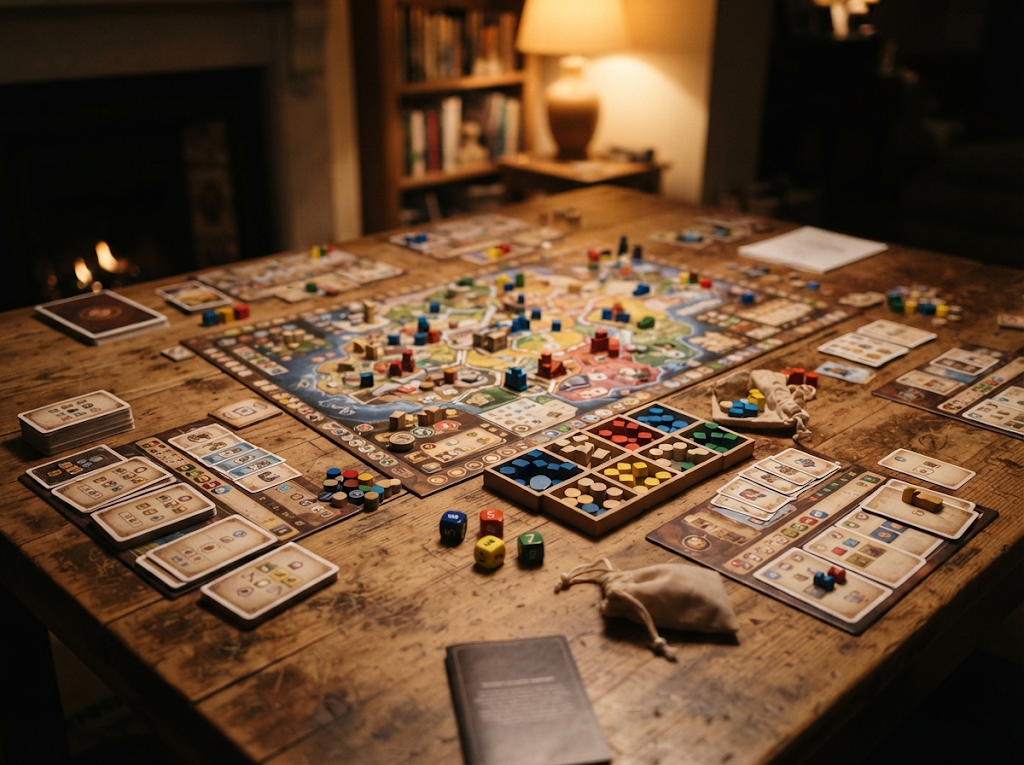
A board game lives or dies by its rulebook. The best design in the world fails if a group of friends spends the first hour arguing about what a card means. When a publisher in Montreal, Lyon or Brussels wants to sell a game to English-speaking players, or an American studio wants to reach French tables, the rules must travel across the language without losing their logic. A translated rulebook succeeds when players can finish their first game without opening a browser to look up what a sentence meant. This guide covers how to localise tabletop games for French and English audiences.
More Than a Rulebook
A game box contains many texts: the rulebook, cards, boards, tokens, reference sheets, setup diagrams, the box back and sometimes a story booklet. Each has a different function. Cards need short, punchy text that fits small spaces. The rulebook needs clear structure and examples. Marketing text on the box must attract buyers in a shop in seconds. A good localisation plan treats these as separate tasks with a shared glossary.
Game Terms Need Decisions
Every game invents words: actions, resources, phases, factions and abilities. Once a term is chosen, it must stay the same everywhere. If the French edition uses one word for a resource on the board and another in the rules, players will wonder whether they are different things. Build a glossary before translation starts, and let designers approve key terms, since they know which distinctions matter for the mechanics.
Clarity Before Style
Rules are instructions, so short sentences, active verbs and a consistent order work best. French tends to be more formal in written instructions, and English often addresses the player directly. Choose a tone, perhaps friendly but precise, and apply it throughout. Examples are essential: show a sample turn, a tricky case and an exception, and check that the picture and the text agree.
Space and Layout
French text is often longer than English, usually by about fifteen to twenty percent, and cards have little room. Designers should leave space for expansion, or the translator must find shorter wording. Icons help reduce text, and the Association of Game Designers and publishing communities, such as BoardGameGeek, show how much players value clear iconography. Always test the final layout with the translated text before printing.
Working With Language Professionals
Game text mixes rules, humour and story, so look for translators who play games and understand the mechanics. A french translation company can handle large projects, assign specialists to card text, rules and marketing, and keep terminology consistent across expansions. Ask for a sample on a difficult page of rules before you commit, and share a copy of the game so translators can play it.
Humour, Puns and Flavour Text
Flavour text and card names often rely on wordplay, references and cultural jokes. A literal translation can fall flat. Instead, ask for adaptation: keep the mood and function, and find an equivalent joke or image in the target language. Mark which lines are essential for rules and which are free for creative adaptation. This gives translators freedom without risking confusion about how a card works.
Crowdfunding and Community
Many games reach the public through crowdfunding, where campaign pages, updates and comments are read by backers in several countries. Translate the campaign page, the video subtitles and the key updates. Backers often volunteer proofreading, and their feedback is valuable, but a professional should make the final decisions. For related reading on the language pair, see this article on French to English translation.
Digital Companions and Apps
Games increasingly come with apps for scoring, solo play or story tracking. Strings in the app must match the physical components exactly, so share the same glossary with developers. Keep text in separate files, and test the app on small screens where long French words might be cut off. Provide a link to a rules video in each language for players who prefer to watch.
Print, Errata and Updates
Errors discovered after printing happen even in well-checked games. Prepare a clear errata page in both languages, and store all translated files with version numbers. If you reprint, include corrections and update digital downloads. Keep a list of rules questions from players, since they show which sentences were unclear and can improve the next edition.
Playtesting in Both Languages
The final test is simple: give the translated game to new players and watch them. Do not explain anything. Note where they stop, reread or argue. Each pause is a sentence to improve. Playtesting in French and English costs a few evenings and prevents months of support emails.
Distribution and Retail Notes
Retail partners also need information. Prepare short product descriptions, age and player information, playing time and a few selling points in both languages. Shops and distributors compare many games, so clear and consistent information makes yours easier to order and recommend. Include safety labelling and importer details where the law requires them, and check these requirements for each sales region before the print run.
Plan the Release
Schedule translation early, ideally while the game is still in final development, so that rule changes can be reflected in all languages at once. Fix the text before layout, give translators the final art for context and allow time for proofreading on printed proofs. A well localised game feels like it was designed in the player's own language, and that feeling brings people back to the table.